


 June 3, 2026 3:51 am
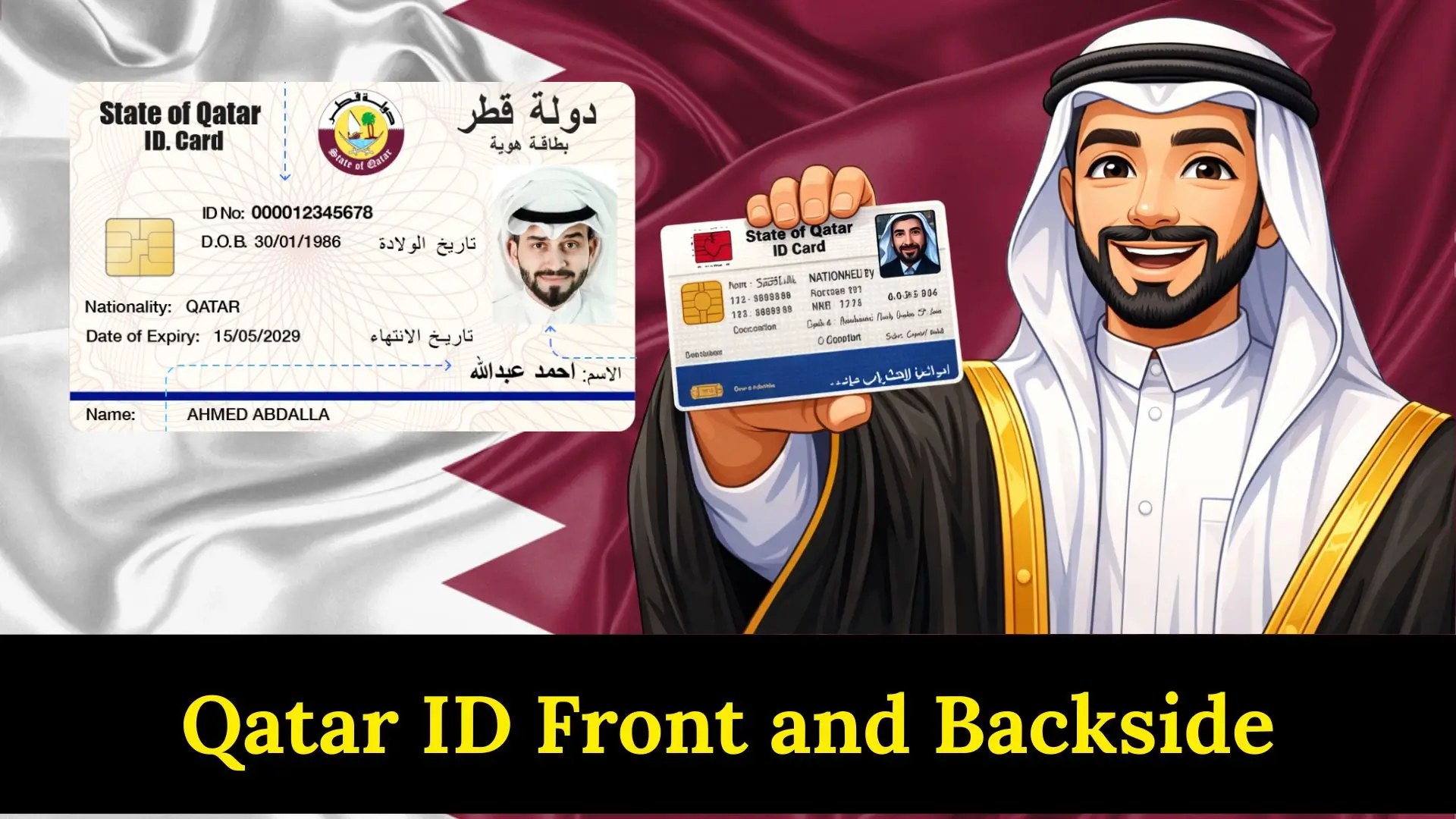
Qatar ID front and backside: These two faces of the Qatar National ID card hold critical personal, biometric, and security information that every resident and citizen in Qatar must understand.
Whether you’re a Qatari national, an expatriate worker, or a long-term resident, your Qatar ID (also known as the QID) is your most important document in the country. From banking and healthcare to travel and government services, this card is required at every step.
Qatar ID Frontside
The front of the Qatar ID card is the primary face of identification. Here is what you will find on the Qatar ID front side:
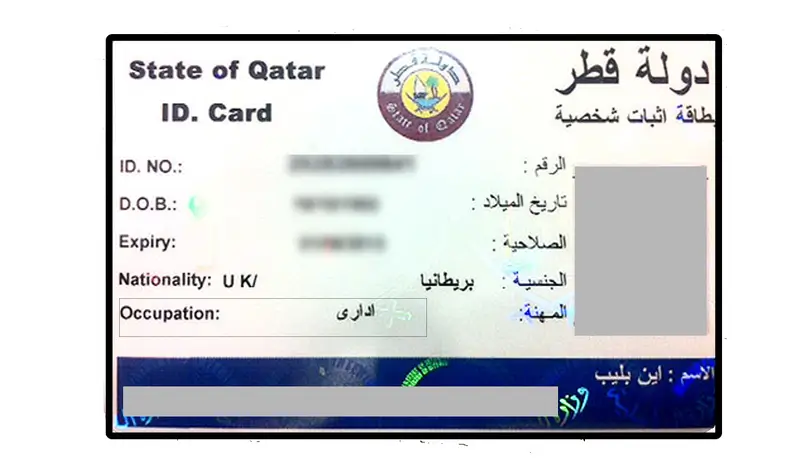
Key Elements on the Qatar ID Front Side
- Full Name (in Arabic and English)
- QID Number (a unique 11-digit identification number)
- Date of Birth
- Nationality
- Gender
- Card Expiry Date
- Photograph of the cardholder
- Qatar National Emblem (Golden eagle with shield)
- Card Issue Date
The QID Number is especially important, it starts with a digit that identifies the category of the cardholder. Numbers beginning with “2” typically indicate Qatari nationals, while other prefixes indicate different residency statuses.
The front side also carries color-coded design elements. Qatari nationals have a different card design compared to expatriate residents, helping authorities quickly identify the cardholder’s status at a glance.
Qatar ID Backside
The backside of the Qatar ID card contains additional important information and security features. Here is what you will find:
- Machine Readable Zone (MRZ) two lines of alphanumeric code at the bottom
- Barcode or QR Code for digital verification
- Employer/Sponsor Information (for expatriates)
- Job Title or Profession
- Blood Group
- Smart Chip (embedded for biometric data storage)
- Additional security holograms
The MRZ (Machine Readable Zone) on the backside is critical. Border control authorities and immigration officers scan this zone to instantly verify the cardholder’s identity and travel authorization status.
The backside also stores biometric data including fingerprint information in the embedded chip. This makes the Qatar ID one of the most secure national identity documents in the Middle East.
Security Features on Qatar ID Front and Backside
Qatar’s ID card uses advanced security features to prevent forgery and fraud. Here is a breakdown of the key security elements:
| Security Feature | Location | Purpose |
|---|---|---|
| UV Reactive Ink | Front Side | Glows under ultraviolet light to confirm authenticity |
| Microprinting | Front Side | Tiny text visible under magnification, hard to replicate |
| Holographic Overlay | Front Side | Changes appearance at different angles |
| Smart Chip | Backside | Stores biometric and personal data securely |
| MRZ Code | Backside | Machine-readable identity verification |
| QR Code / Barcode | Backside | Digital verification by authorities |
| Laser Engraving | Front & Back | Permanent, tamper-proof printing |
Qatar ID Front Vs Backside
| Feature | Front Side | Back Side |
|---|---|---|
| Photograph | Yes | No |
| QID Number | Yes | No |
| Name (Arabic/English) | Yes | No |
| Nationality | Yes | No |
| Expiry Date | Yes | No |
| MRZ Code | No | Yes |
| Smart Chip | No | Yes |
| Sponsor/Employer Info | No | Yes |
| Blood Group | No | Yes |
| Hologram | Yes | Yes |
| Barcode / QR Code | No | Yes |
| Biometric Data | No | Yes (in chip) |
How to Read Your Qatar ID Correctly?
Many residents struggle to correctly interpret the information on their Qatar ID. Follow these steps to read your Qatar ID front and backside accurately:
- Step 1: Start with the Front Side Locate your full name; it appears in both Arabic script (right side) and English (left side). Your photograph is on the left side of the front.
- Step 2: Find Your QID Number The 11-digit QID number is printed prominently. The first digit indicates your residency category. Write this number down and memorize it; you’ll need it constantly for government services.
- Step 3: Note Your Expiry Date The expiry date is printed in DD/MM/YYYY format. Make sure to renew at least 30 days before expiry to avoid fines.
- Step 4: Flip to the Backside Check your employer/sponsor information; it shows the company or individual responsible for your residency permit.
- Step 5: Check the MRZ Code The two-line Machine Readable Zone at the bottom of the backside begins with your document type code. You don’t need to read this manually; it is scanned electronically by officials.
- Step 6: Verify the Smart Chip The embedded chip on the backside stores your biometric data. Never bend, scratch, or expose the card to extreme heat; this can damage the chip.
Benefits and Drawbacks of the Qatar ID System
Benefits
- Single card for all official purposes, no need for multiple documents
- Biometric security reduces identity fraud significantly
- Digital chips enable fast verification at airports, hospitals, and banks
- MRZ zone allows automatic border control processing
- Bilingual (Arabic/English) text makes it internationally readable
- Online services linked to QID number for convenience
According to the Qatar Ministry of Interior, over 2.5 million ID cards were issued between 2018 and 2023, with the smart chip system dramatically reducing fraud cases by an estimated 60%.
Drawbacks
- Physical damage to the chip can make digital verification impossible
- Expiry dates are strict; late renewal results in fines
- Loss or theft requires a full re-application process
- Expatriates’ cards are tied to employer/sponsor job changes require updates
Common Mistakes People Make with Their Qatar ID
Avoid these frequent errors that residents make regarding their Qatar ID:
- Bending or laminating the card: this damages the smart chip on the backside.
- Ignoring the expiry date: fines in Qatar for an expired QID can reach up to QAR 500.
- Providing incorrect QID numbers online: always copy directly from the card.
- Not updating sponsor information: after changing employers, the backside must reflect current details.
- Leaving the original card at home: carrying a photocopy does not meet Qatar’s legal requirements.
- Storing it near magnets or electronics: this can corrupt the embedded chip data.
- Delaying renewal: Qatar requires renewal before expiry, not after.
For official guidance on penalties, visit the Qatar Ministry of Interior Portal. For GCC identity standards, refer to the Gulf Cooperation Council official site.
FAQs About Qatar ID Front and Backside
Q1: What information is on the Qatar ID front and backside?
The front side contains your name, photograph, QID number, nationality, date of birth, and expiry date. The backside holds your sponsor info, blood group, MRZ code, QR code, and smart chip with biometric data.
Q2: Can I travel within Qatar using only my Qatar ID?
Yes. Your Qatar ID is accepted as a valid identification document within Qatar for all domestic purposes including travel, healthcare, banking, and government services.
Q3: What should I do if the Qatar ID backside chip is damaged?
Visit the nearest Ministry of Interior service center immediately. A damaged chip means authorities cannot digitally verify your identity, which can cause issues at border control and hospitals.
Q4: Is the Qatar ID front and backside the same for citizens and expatriates?
No. Qatari nationals and expatriate residents have different card designs. Citizens’ cards typically show different color coding and field labels compared to residence permit cards held by expatriates.
Q5: How long does it take to get a new Qatar ID after applying?
Processing typically takes 3 to 7 business days for standard applications. Urgent services are available at select MOI service centers for faster processing.
Q6: Can I use a photocopy of my Qatar ID front and backside instead of the original?
No. Qatar law requires residents to carry the original ID card at all times. A photocopy is not a legal substitute, although some private businesses may accept it for non-official transactions.
Q7: Where can I verify my Qatar ID information online?
You can verify your Qatar ID details on the official Qatar Ministry of Interior portal.
Conclusion
Understanding the Qatar ID front and backside is essential for every resident and citizen in Qatar. The front side carries your core personal information, name, photo, QID number, and nationality while the backside stores critical digital and biometric data, including the MRZ code, smart chip, and sponsor information.
Sheikh Khalifa bin Hamad
I am Sheikh Khalifa bin Hamad, the writer behind https://qataridcheck.com/. I share simple guides about Qatar ID services, residency updates, and government procedures. My goal is to help residents easily check QID status, renewals, fines, and official information online.
