


 June 3, 2026 3:54 am
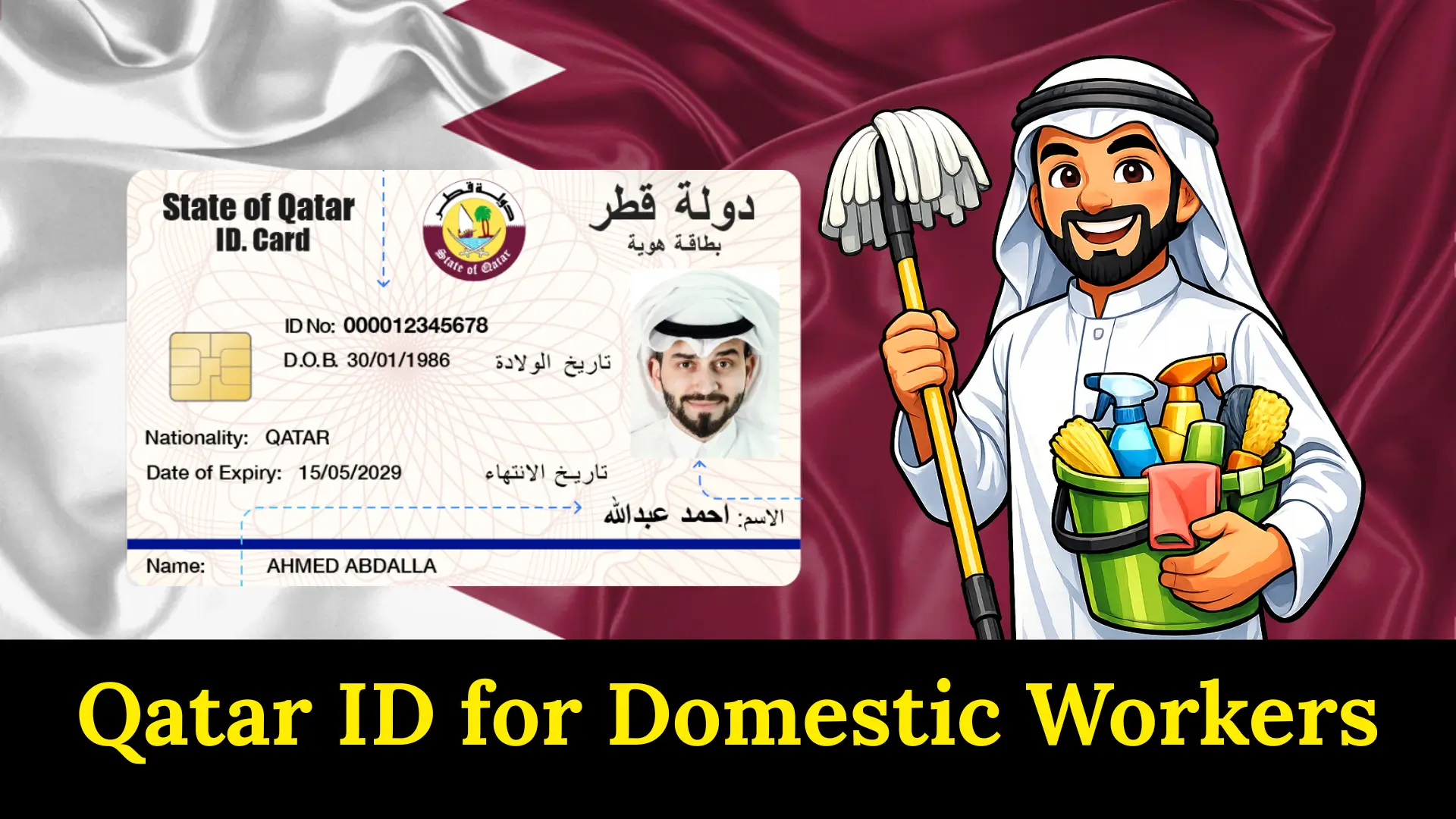
Qatar ID for Domestic Workers is the official identification card issued once a residence permit is approved, confirming that a housemaid, nanny, driver, or cleaner is legally sponsored in Qatar. The QID is printed only after contract attestation, medical screening, and biometric fingerprint registration are completed.
Domestic workers play a vital role in Qatari households, and obtaining their Qatar ID is a straightforward process when every step is followed correctly. This guide covers contract requirements, required documents, medical and biometric procedures, and how sponsors can renew the card on time. To confirm whether a QID is active, you can check the status online through the main Qatar ID Check system for fast and accurate verification.
What is the Qatar ID for Domestic Workers?
The Qatar ID for Domestic Workers is the official national identity card that confirms a worker’s legal residence and sponsorship in Qatar. Issued after the residence permit is approved, it serves as both physical and digital proof that the worker is authorized to live and work under a private sponsor. This ID allows access to essential services like healthcare, banking, and government platforms, and it is also used for identification during airport travel and security checks.
Who Needs a Domestic workers ID in Qatar?
Domestic workers such as housemaids, nannies, private drivers, cooks, and cleaners are eligible when they are legally sponsored by a household employer. The sponsor must provide a properly written and attested employment contract clearly outlining job responsibilities, salary, and allowances. Employers must also ensure the worker holds a valid passport, the correct household visa category, and meets all required medical and age regulations.
Documents for Qatar ID for Domestic Workers
To complete the Qatar ID (QID) process for domestic workers, sponsors must gather all required documents in advance. These include clear passport copies, an officially attested employment contract, approved medical results, and fingerprint verification to avoid delays.
Always carry both originals and photocopies before visiting any office. The checklist below explains who provides each document and why it is important:
| Document | Provided By | Purpose |
|---|---|---|
| Valid passport (minimum 6 months) | Worker | Required for visa issuance, medical tests, and residency procedures |
| Attested domestic worker contract | Sponsor | Confirms legal employment terms and sponsor responsibility |
| Entry visa approval | Sponsor | Authorizes entry under the domestic worker category |
| Medical examination report | Worker | Verifies health status for residence approval |
| Fingerprint registration proof | Worker | Mandatory for residence permit and QID issuance |
| Sponsor’s Qatar ID copy | Sponsor | Links the worker to the correct sponsor record |
| Passport-size photos (ID standards) | Worker | Used for QID printing and official records |
How to Get a Qatar ID for Domestic Workers
Sponsors obtain the Qatar ID (QID) for domestic workers by validating the employment contract, securing the entry visa, completing medical screening, registering biometrics, and finally issuing the ID card.
Following this structured process helps avoid delays, rejections, and unnecessary repeat visits.
1. Prepare and attest the domestic worker contract
The employment contract must be written in Arabic with clearly stated terms. It must be officially attested through the approved government channel before any visa or ID application can begin.
2. Apply for the domestic worker entry visa
Submit the visa application using the worker’s passport details under the household worker category. Some cases may require additional documents such as a police clearance or pre-travel medical report.
3. Complete the medical examination after arrival
Once the worker enters Qatar, a medical check must be completed as soon as possible. Medical clearance is mandatory for issuing both the residence permit and the Qatar ID for Domestic Workers.
4. Register fingerprints and biometrics
After passing the medical test, the worker must complete fingerprinting and biometric registration. Carrying the correct documents ensures a smooth process and prevents the need for multiple visits.
5. Residence permit approval and QID issuance
After successful medical and biometric verification, the residence permit is approved. The QID is then printed, allowing the domestic worker to access official services and travel legally within and outside Qatar.
Validity, Renewal, and Fees Qatar ID for Domestic Workers
The Qatar ID for Domestic Workers is typically issued with a one-year validity and must be renewed before it expires to keep the worker’s legal status active.
In most cases, the QID runs on an annual renewal cycle. Sponsors are advised to start the renewal process early to avoid fines, service interruptions, or visa blocks. Since biometric data, medical records, and the employment contract are already registered, renewals are much faster and simpler than first-time applications.
To stay compliant, always track the expiry date and set reminders 30–45 days in advance. If there are any changes in address, contact number, or job details, update them during renewal to ensure smooth processing and uninterrupted residency.
Tip: For a complete picture of how this fits into Qatar’s immigration system, readers can also review a step-by-step guide on how to obtain a Qatar residence permit, which explains the overall workflow sponsors usually follow.
Rights and Protections for Domestic Workers
Domestic workers are protected by contract-based rights that include regular rest days, paid leave, daily breaks, and end-of-service benefits. Employers must arrange weekly schedules that follow legal working-hour limits and provide time for rest and religious practices.
Every domestic worker is entitled to at least one fully paid rest day each week. Paid annual leave builds up over time and should be taken through mutual agreement between the worker and the sponsor. When a contract ends, end-of-service benefits must be paid based on the worker’s continuous period of employment. These protections help ensure fair treatment, stability, and fewer workplace disputes.
Exit and Travel Rules for Domestic Workers
Most domestic workers in Qatar can travel freely once they give proper notice to their sponsor. It is standard practice to inform the employer before booking any trip. While traveling, the worker should carry their passport, Qatar ID, and return ticket. It is also important to check airline policies and destination visa requirements in advance. For extended trips, ensure the residence permit and Qatar ID stay valid to avoid any re-entry issues.
Fees for Qatar ID for Domestic Workers
The cost for obtaining a new or renewing an existing Qatar ID (QID) for domestic workers including housemaids, drivers, and farmers is typically QAR 300 per year. Renewal options are available for two or three years, priced at QAR 600 and QAR 900, respectively. Additional work permit fees may apply, and all charges are subject to updates by the Ministry of Interior.
Timeline for Qatar ID Domestic Workers
Obtaining a Qatar ID (QID) for domestic workers usually takes 2 to 4 weeks after arrival. The process includes medical examinations, fingerprinting, and contract attestation. It should be started immediately to secure legal residency and work authorization, with the entire deployment process often extending up to 80 days.
Common Causes of Delays and How to Prevent Them
Delays often occur due to missing attestations, incomplete medical tests, or fingerprinting issues. Understanding these common hurdles can help you avoid setbacks:
- Unattested Contract: Ensure the employment contract is properly attested before submitting visa applications or booking appointments.
- Pending Medical Results: Schedule medical examinations promptly after arrival and regularly follow up to collect the results.
- Fingerprint Form Mistakes: Carry all required documents, photos, and completed forms to prevent repeated visits.
- Visa Category Errors: Verify that the visa matches the correct household worker category before entering Qatar.
For first-time sponsors, referring to a guide on how to get a Qatar ID provides a clear overview of the post-arrival procedures. It sets the right expectations for obtaining a Qatar ID for Domestic Workers efficiently.
Quick Tips to Minimize Rejections
- Carefully review each form before submission and keep photocopies of all documents.
- Bring original passports along with two copies for both the sponsor and the worker.
- Carry extra passport photos that meet the official ID size requirements.
- Retain all payment receipts and printed results for your records.
- Ensure consistent spelling across all documents to prevent mismatches.
- Begin the renewal process early to avoid late fees or service delays.
Sponsor Responsibilities and Best Practices
Sponsors must renew documents on time, maintain accurate payroll records, and follow rest and leave regulations to ensure compliance.
Documentation and payroll should be managed continuously. Renew permits before they expire and retain digital copies of all receipts. If food or housing is not provided, ensure employees receive the correct allowances with their salary. Schedule rest days and leave in advance, recording approvals in writing. Keep all records organized alongside employment contracts and residence documents. This systematic approach minimizes complaints and fosters a positive working relationship.
Read Also
- MOI Qatar ID Check
- Qatar ID Fine Check
- Qatar ID Download
- Qatar ID Renewal
- Qatar ID Expired
- Qatar ID Application
- Qatar ID Photo Requirements
- Qatar ID for GCC Residents
FAQs About Qatar ID for Domestic Workers
The Qatar ID (QID) for domestic workers is an official identity card that confirms legal residence and sponsorship in Qatar. It allows access to healthcare, banking, government services, and serves as proof of legal work authorization.
Domestic workers, including housemaids, nannies, private drivers, cooks, and cleaners, who are legally sponsored by a household employer with an attested contract and valid visa are eligible. Workers must meet medical, age, and passport requirements.
Sponsors must attest the employment contract, apply for the domestic worker visa, complete medical tests, register fingerprints and biometrics, and finally obtain the residence permit and QID. Following each step carefully ensures smooth processing.
The Qatar ID is usually valid for one year and must be renewed annually to maintain legal status. Fees range from QAR 300 for one year, QAR 600 for two years, and QAR 900 for three years. Renewal is faster than initial issuance.
Domestic workers are entitled to weekly rest days, paid annual leave, daily breaks, end-of-service benefits, and fair treatment as per the contract. Sponsors must follow working-hour limits and ensure proper allowances for food or housing if not provided.
Conclusion
The Qatar ID for Domestic Workers is essential for legal residency, work authorization, and access to vital services. Sponsors play a crucial role in ensuring timely issuance, renewals, and compliance with labor regulations. By following proper documentation, medical, and biometric procedures, both workers and employers can maintain a smooth, secure, and legally compliant working relationship in Qatar.
Sheikh Khalifa bin Hamad
I am Sheikh Khalifa bin Hamad, the writer behind https://qataridcheck.com/. I share simple guides about Qatar ID services, residency updates, and government procedures. My goal is to help residents easily check QID status, renewals, fines, and official information online.
